Sorry to say, Fly tying has been put on hold
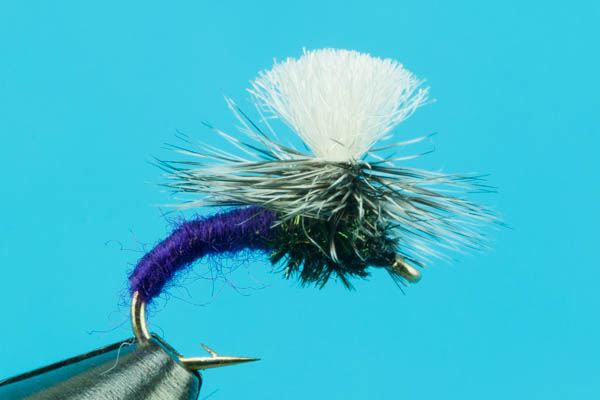
Fly of the Klinkhammer Special
SALINAS VALLEY FLY FISHERS APRIL
April Fly of the Month
Klinkhammer
HOOK DAIICHI 1160 #8-14
THREAD UNI-THREAD TAN 8/0
BODY TAN SUPERFINE
THORAX 3 STRANDS PEACOCK HERL
TAIL 6-12 MED. DUN SPADE HACKLE
FIBERS
WINGPOST
WHITE POLY YARN
HACKLE MEDIUM DUN TIED OFF WITH
SPIDERWEB THREAD
Dutch fly fisherman and fly tier, Hans Van Klinken, came up with this pattern in 1984 along the
Glomma River in Norway. He noticed that most of the graylings were being caught with dry flies
that were weighted to sink into the surface film. Upon examining one of the graylings, Hans also
noted the abundance of large curved caddis larvae within the stomach contents. These
observations led Hans to tie a caddis larvae pattern onto a scud hook and submerge the pattern
into the surface film by using a parachute hackle and floatable wingpost
In the U.S. The Klinkhammer has become a basis for a variety of mayfly emergers and can be
tried to represent any of the many mayflies. Many fly fishing enthusiast speculate that the
emerger patters are more produce then standard dry patterns because trout develop a
“preference” for them. It is theorized that once the mayfly is fully emerged it is quick to fly off,
where the emerger in contrast is a “sitting duck” for a longer period of time and the trout become
conditioned to focus on the easy prey. Having said that, the other insight that might be gleaned
from this is that during active feeding periods, trout may take dry patterns more readily because
they have less time to scrutinize their prey. Both interpretation have merit, but the conclusion may
well be to consider the emerger during times when fish are not actively feeding.
Welcome to the fun world of creating and perfecting flies for fishing or display.

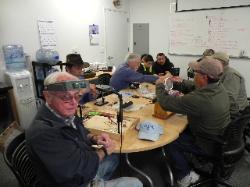
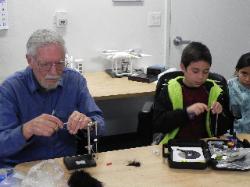
There in nothing that replaces the thrill of setting the hook on a beautiful fish especially if you have correctly read the water, made the cast and presented the fly correctly. Imagine the added thrill when you created the fly that made that fish move and strike, Nothing like it!
Our club has a long history of tying flies as a group while helping others learn and expand their enjoyment for the art that is fly fishing. The Club sponsors a night of fly tying and instruction every month at 6 PM on the 3rd Wednesday. We meet in the Conference room at the Salinas Airport. The club provides all the material necessary to tie our “Fly of the Month” All levels of skill and experience are welcome! If you are a novice and have always wondered about tying feathers and fur to a hook, don’t hesitate to come by – we have the equipment and experienced members who will be happy to get you started in this interesting hobby. Please join us!
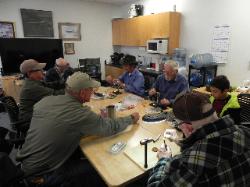
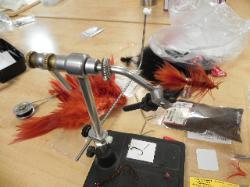
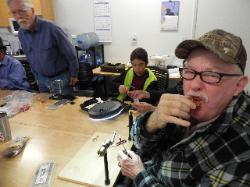
We will be updating this section of the web site periodically to include tying tips as well as selecting the flies for the year. If there is a fly you would like to tie, email Bill Pshide – Flytyer1940@sbcglobal.net He will be glad to substitute a fly if interest is shown.
.
Fly Tying Tip of the Month
Too Much on the Hook
Poorly tied Clouser with
Way too much material.
I am talking about material and thread. One of the biggest problems I had as a beginning fly tyer was just this, putting too much material (feathers, hair, flash) onto the flies I was tying. I thought that the more material the better.
Part of that was just a complete misunderstanding of how flies perform. Adding more material might make the fly look “fuller” but it won’t allow the fly to fish properly.
Advice for a New Tyer: When putting material on a hook, use half of what you think you need (then sometimes cut this in half again!) When wrapping on the material use as few wraps as possible. If you are trying to “build up a head”…don’t. Let the material you tie on and the wraps you use to hold that material on form the head of the fly..
 Salinas Valley Fly Fishers
